On this page
The table
- Surface: a square card table or a dining table that seats four with elbow room. Four walls of 19 stacks need roughly a 32-inch square of clear space, plus room for the racks.
- Mat: a neoprene Mahjong mat (usually 31–34 inches square) quiets the clatter, stops tiles sliding and protects the table. Our mat guide covers sizing.
- Equipment: one complete American set (152 tiles with 8 Jokers), four racks with pushers, two dice. Ask guests to bring their own current NMJL card, and keep a spare or two if you can.
- Light: overhead or well-placed lamps. Tiles in shadow slow everyone down.
If you are also the one setting up, the setup guide gets the walls built in a few minutes.
Drinks off the table
Keep drinks off the playing surface entirely. A spilled glass ruins cards, soaks a mat and can stain tiles. Put a small side table or tray beside each chair for water, tea or wine. If you serve cocktails, use coasters and glasses that don't sweat onto the table.
Snacks that keep the tiles clean
Players touch every tile, face down, all night. Anything greasy, dusty or sticky ends up on the set. Plan food that is dry, one bite and eaten with fingers that stay clean.
| Serve | Skip |
|---|---|
| Mixed nuts, pretzel sticks, roasted almonds | Chips with seasoning dust, buttered popcorn |
| Firm cheese cubes and sturdy crackers | Flaky pastries and crumbly cookies |
| Chocolate truffles, shortbread, fruit on picks | Glazed anything, sticky wings |
| Dumplings or spring rolls with toothpicks | Crinkly bags and noisy wrappers at the table |
A separate snack table a step away from the game keeps crumbs out of the racks and gives people a reason to stand up between hands.
Timing
Plan for two to three hours. That fits five to eight hands with a break in the middle. Set an end time up front so guests can plan, and stop when you said you would; Mahjong nights that run late are harder to schedule again.
Agree the house rules first
Before the first wall goes up, take one minute to settle the things that cause arguments later:
- Stakes. Many groups play for small change using the point values on the card, with doubled payouts for self-drawn or Jokerless wins (see scoring and payouts). Plenty of groups play for nothing. Playing for money is optional, is a house-rule decision, and should follow the law where you live. Decide, then say it out loud so nobody is surprised.
- Beginners. If someone is new, decide whether the first hand is open-hand and who the teacher is. See how to teach a beginner.
- Pace. Do you wait for slow players in the Charleston? Is there a time limit per turn? Casual tables usually don't need one.
- Disputes. Whose card settles a question? The current NMJL card and rules are the usual answer.
Beginner tipKeep a printed one-page cheat sheet on the side table: the Charleston order, the Joker rule and the tile counts. It saves the host from answering the same three questions all night.
New players in the group? Share the etiquette guide beforehand so everyone plays by the same table manners.
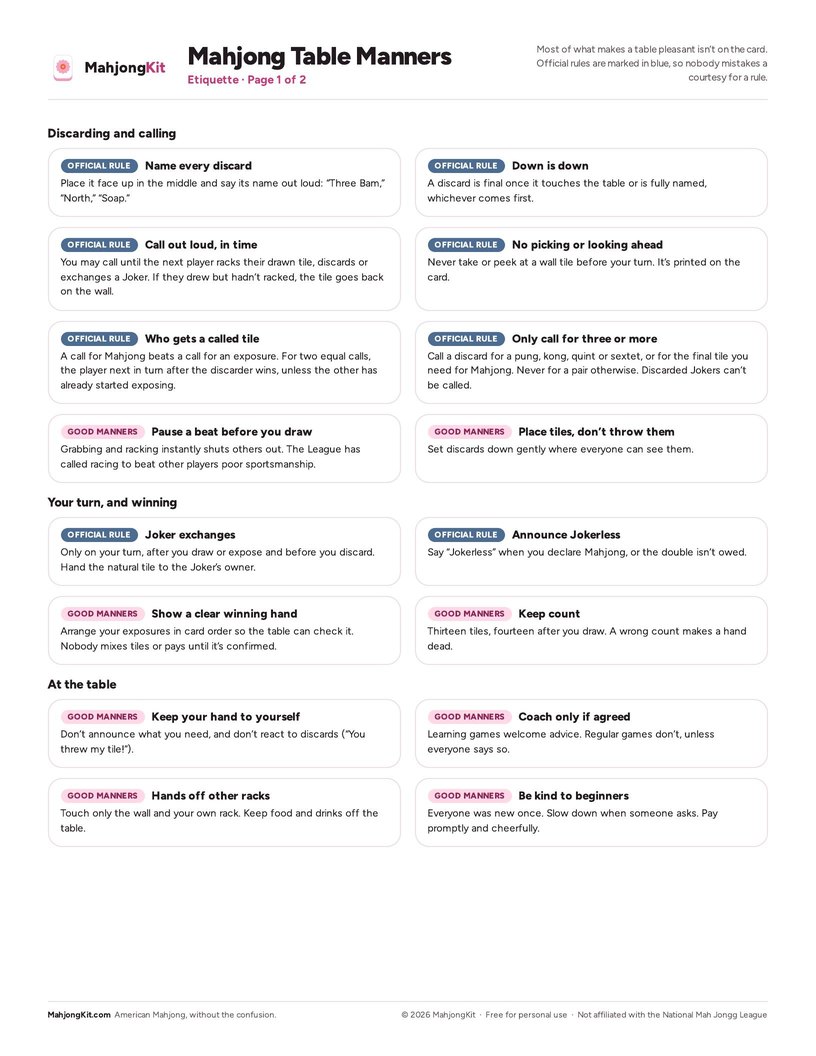
Table manners and house rules
Two pages: table etiquette with every official rule marked, plus a fill-in house-rules sheet your group can agree and sign before play.
After the last hand
Wash the tiles one last time, check the count (152 plus spares), and pack them face down. Roll the mat, don't fold it. Then ask who wants to host next: rotating houses is how a one-off becomes a weekly game.