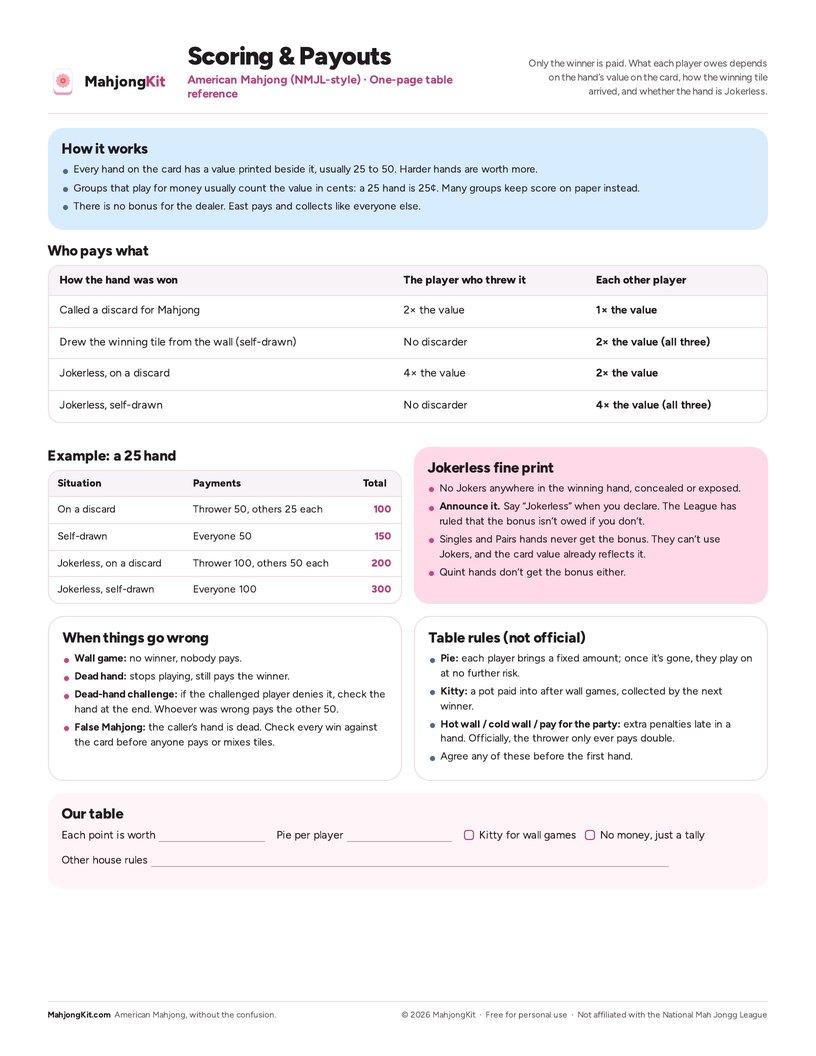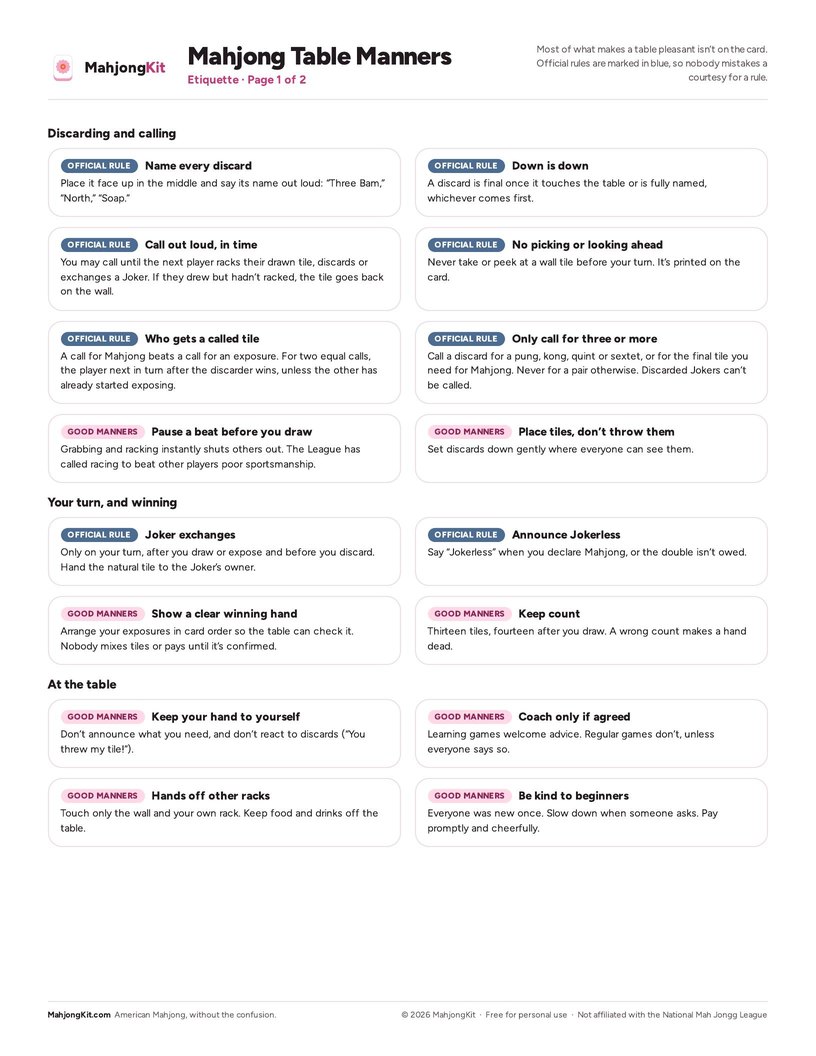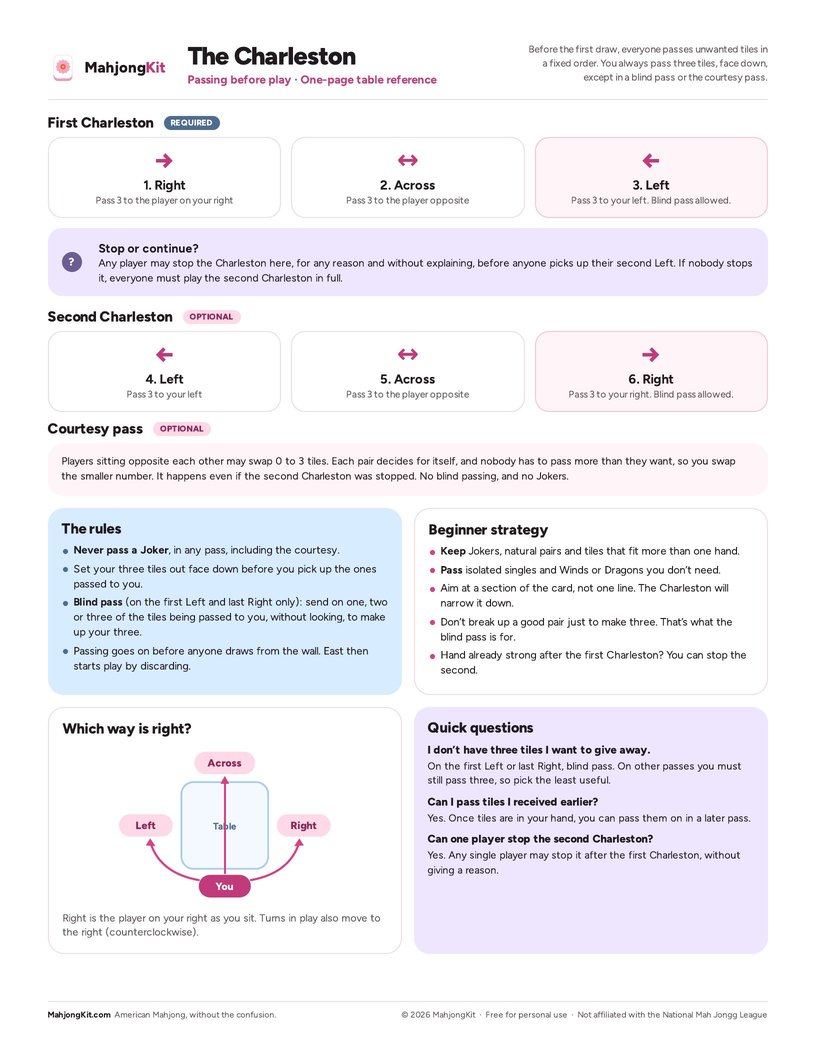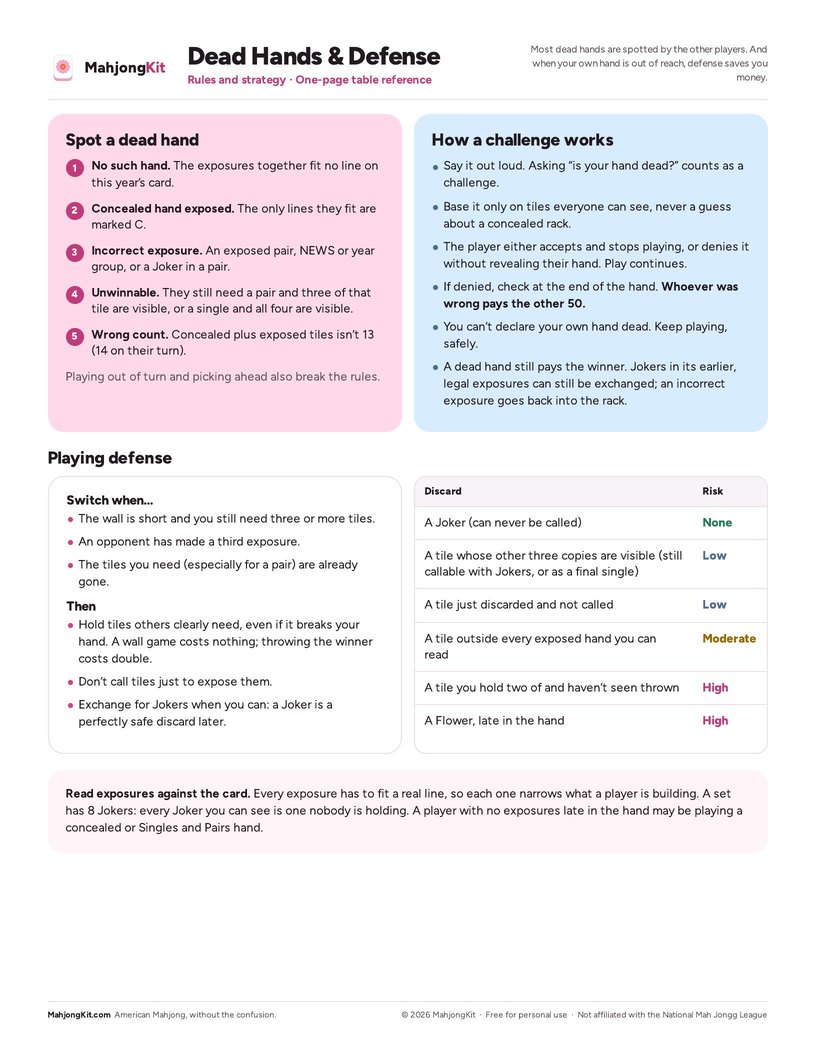
What’s on it
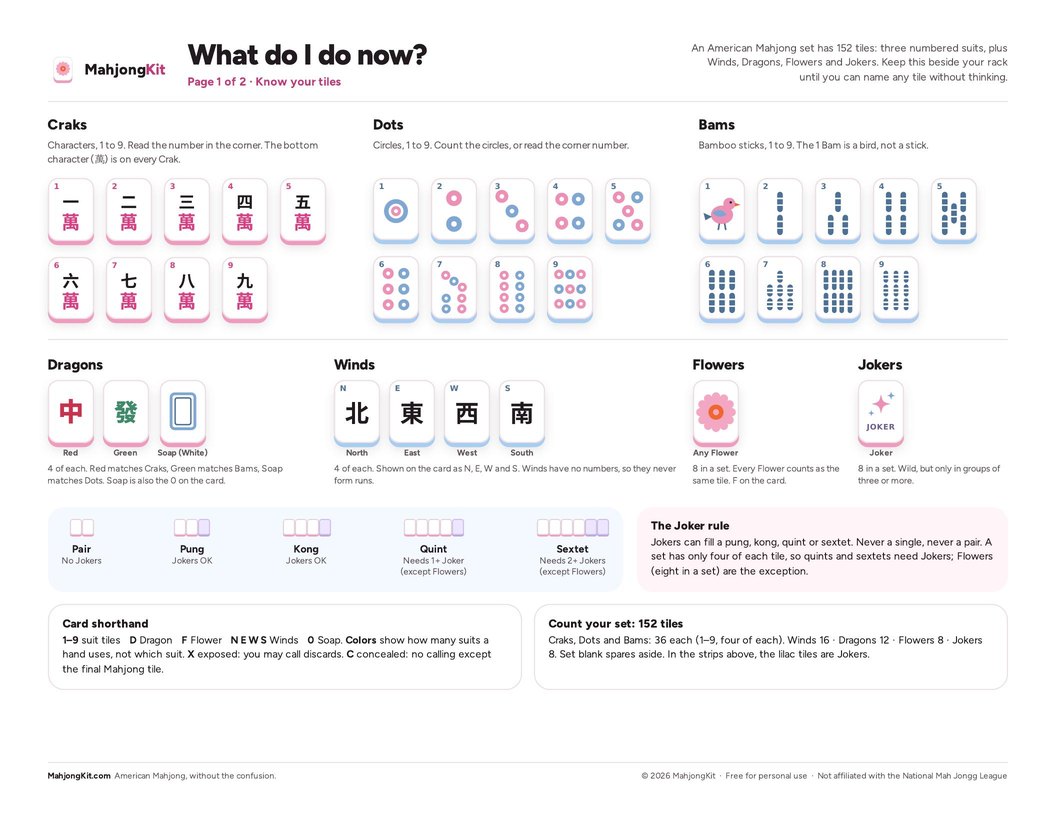
Page 1, Know your tiles. All 27 numbered tiles (Craks, Dots and Bams, 1 to 9) drawn large enough to compare with the ones in your rack, plus the three Dragons, four Winds, Flowers and the Joker. Below them: what a pair, pung, kong, quint and sextet look like, the one Joker rule everybody forgets (and its Flower exception), the shorthand the card uses for each tile, and a quick count to check your set has all 152 tiles.
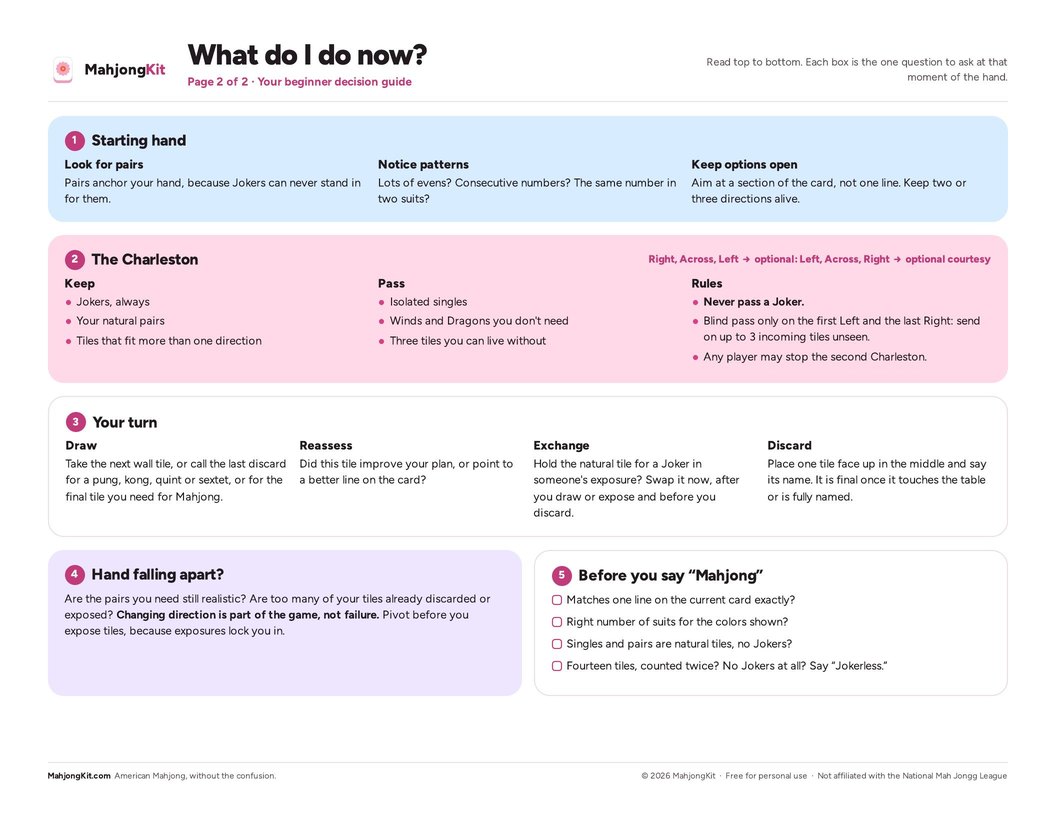
Page 2, Your beginner decision guide. Five steps you read top to bottom: what to look for in your starting hand, what to keep and pass in the Charleston, the four parts of a turn, what to do when a hand stops working, and a four-point checklist before you say “Mahjong.”
How to use it
- Print it landscape on letter paper. Both pages are designed for a home printer; nothing runs to the edge.
- Page 1 lives beside your rack until you can name any tile without looking. Most people stop needing it after three or four games.
- Page 2 is for the pauses. When it’s your turn and your mind goes blank, find the step you are on.
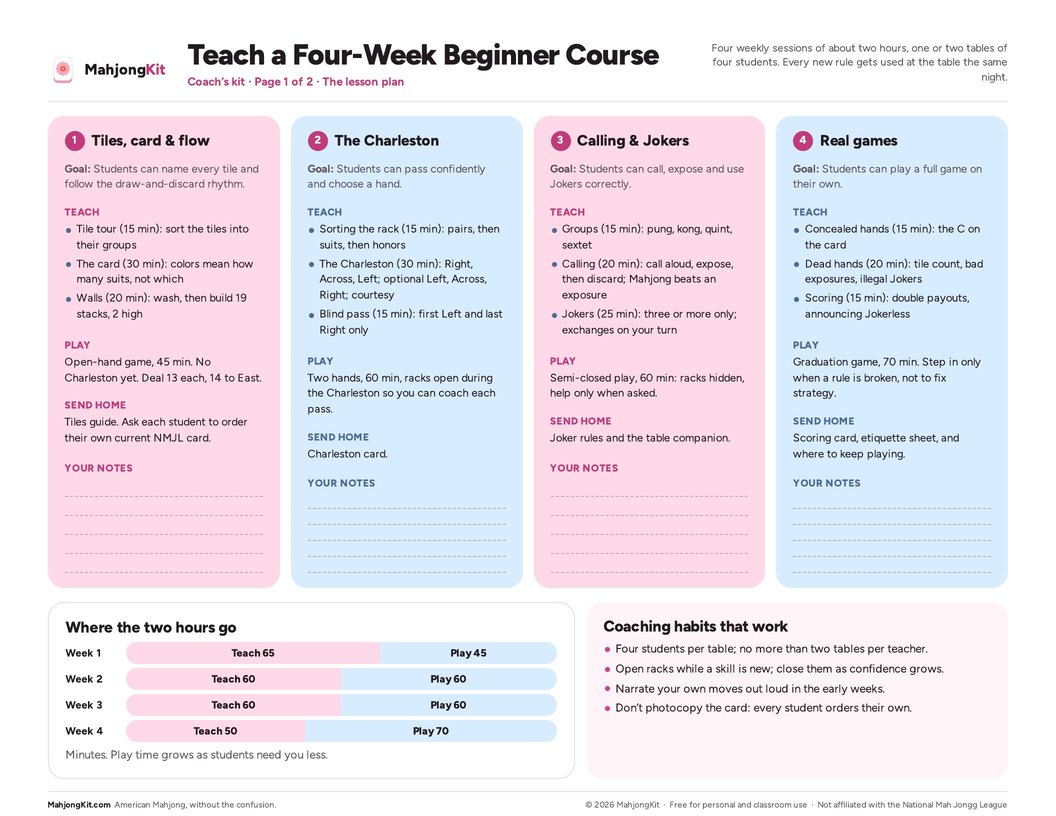
- Teaching? Print one per player. It pairs well with the open-hand first game described in how to teach a beginner.
The tile drawings are original MahjongKit illustrations in a simplified style; your set’s tiles will show the same numbers and symbols with its own artwork. The companion does not reproduce the National Mah Jongg League card, which you still need for the actual hands.
More free printables
Each one is a single sheet or a front-and-back pair, designed for a home printer and free for personal use. The coach's kit is also free for classroom use.